HIEROGLYPH ACADEMY · GUIDED TOURS
Read the land of Mizraim in its own script
Five short tours, about twenty minutes in all. Each ends with a quick check and opens real ancient sentences in the library, with the readings scholars have published. Your progress is saved on this device.
How to read the direction
Start here · 3 min
Read into the faces
Hieroglyphs can run left-to-right, right-to-left, or in columns. The rule: people, birds and animals face the beginning of the line, so you read toward their faces.
Columns run top to bottom
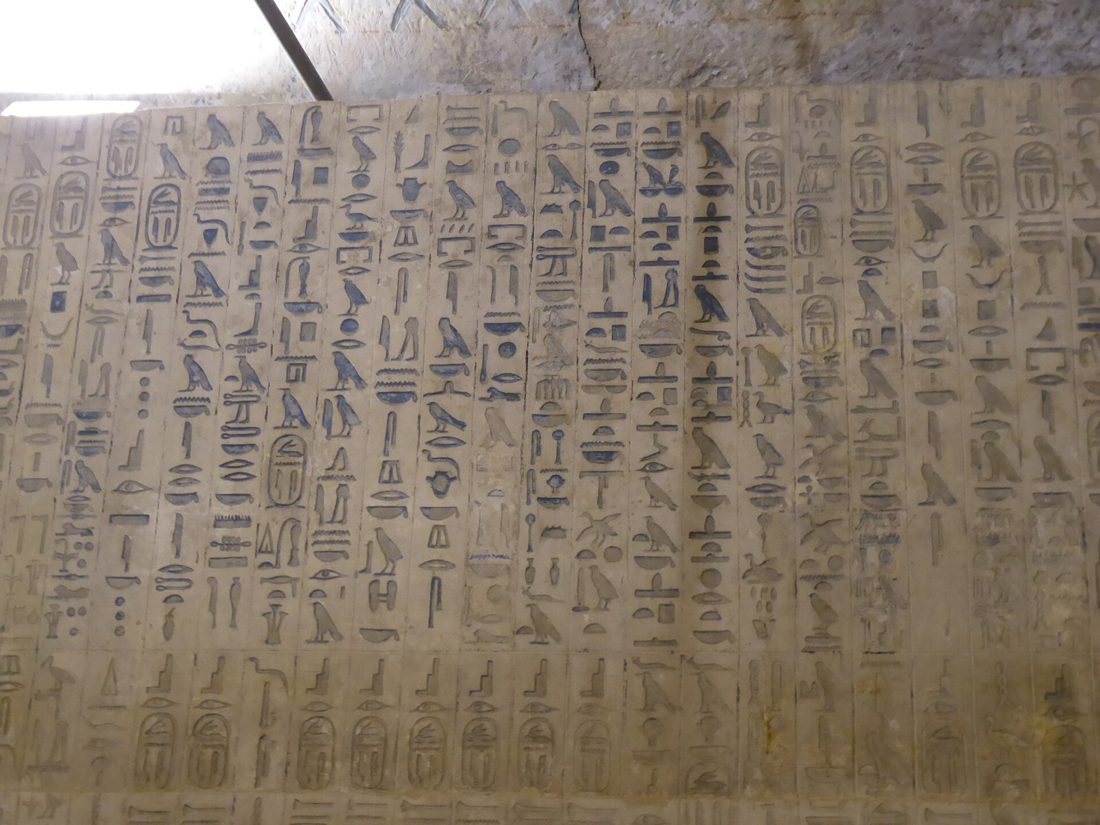
In columns, read from top to bottom, and take the columns in the direction the signs face. The Pyramid Texts of King Unas (c. 2350 BC, Saqqara) are carved in tall columns like this.
Signs are grouped in neat blocks
Scribes stacked small signs into balanced squares. Read a block top to bottom, front to back, before moving on.
Gods first: honorific transposition
The name of a god or king is often written first out of respect, even when it is read later. You will meet this in the offering formula and in royal names.
The 24 sound signs
The “alphabet” · 5 min
Sounds, not letters
Egyptian writing mixes sound signs with picture signs. These 24 signs each stand for one consonant. Vowels were not written, which is why Egyptologists add an “e” to pronounce words.
Sound signs plus helpers
Many words add a picture sign at the end, a determinative, to show the meaning class: a seated man 𓀀 for people, a city 𓊖 for places, foreign hills 𓈉 for foreign lands.
Signs worth knowing on sight
ankh 𓋹 ‘life’ (S34); netjer 𓊹 ‘god’ (R8); the sun 𓇳 Ra (N5); the wedjat eye 𓂀 (D10); the shen ring 𓍶 ‘eternity, encircling’ (V9).
Royal names & cartouches
Spot a king · 4 min
The cartouche
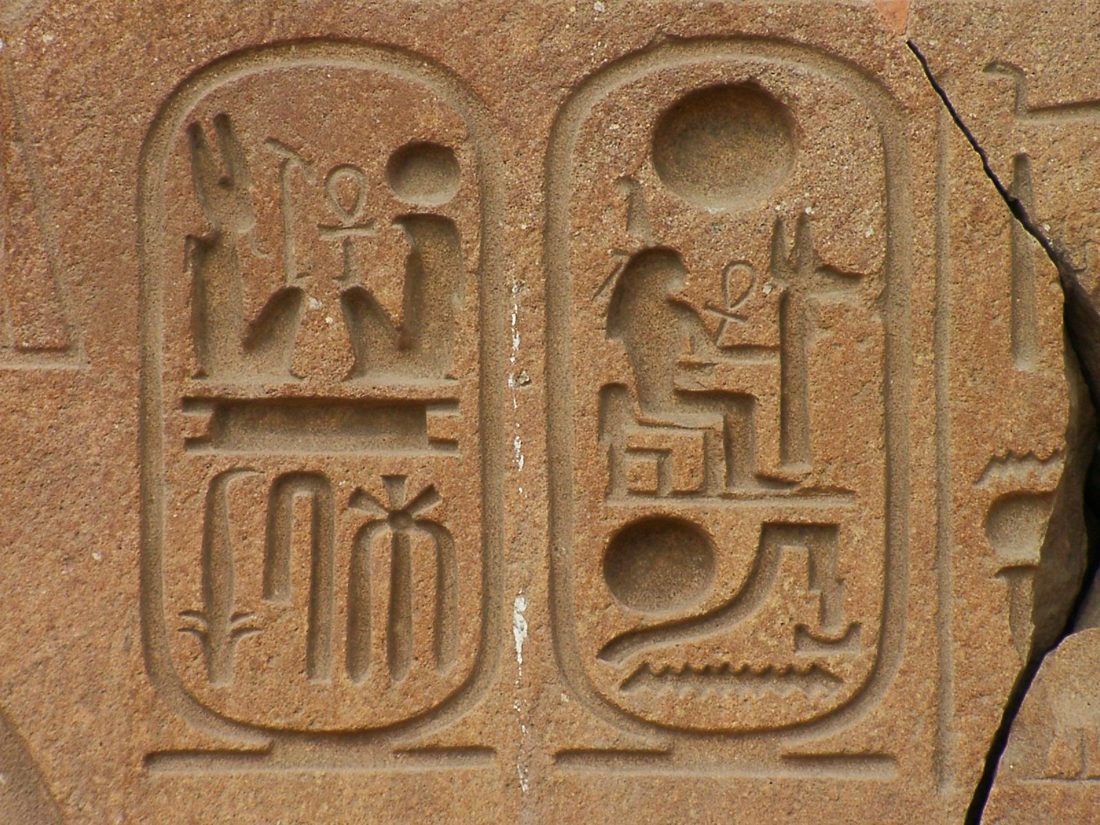
The oval ring 𓍷 (V10) around a king’s name grew out of the shen ring 𓍶 (V9), a loop of rope meaning ‘eternity’. Inside it the Egyptians wrote the king’s two most important names.
“King of Upper and Lower Egypt”
The title nswt-bjtj (sedge 𓇓 + bee 𓆤, each with 𓏏) introduces the throne name.
“Son of Ra”
The title sꜣ-Rꜥ (pintail duck 𓅭 + sun 𓇳) introduces the birth name.
Tutankhamun’s birth name
Twt-ꜥnḫ-Jmn, ‘living image of Amun’, is written with Amun 𓇋𓏠𓈖 first (honorific transposition) and read last.
Kushite kings used the same system
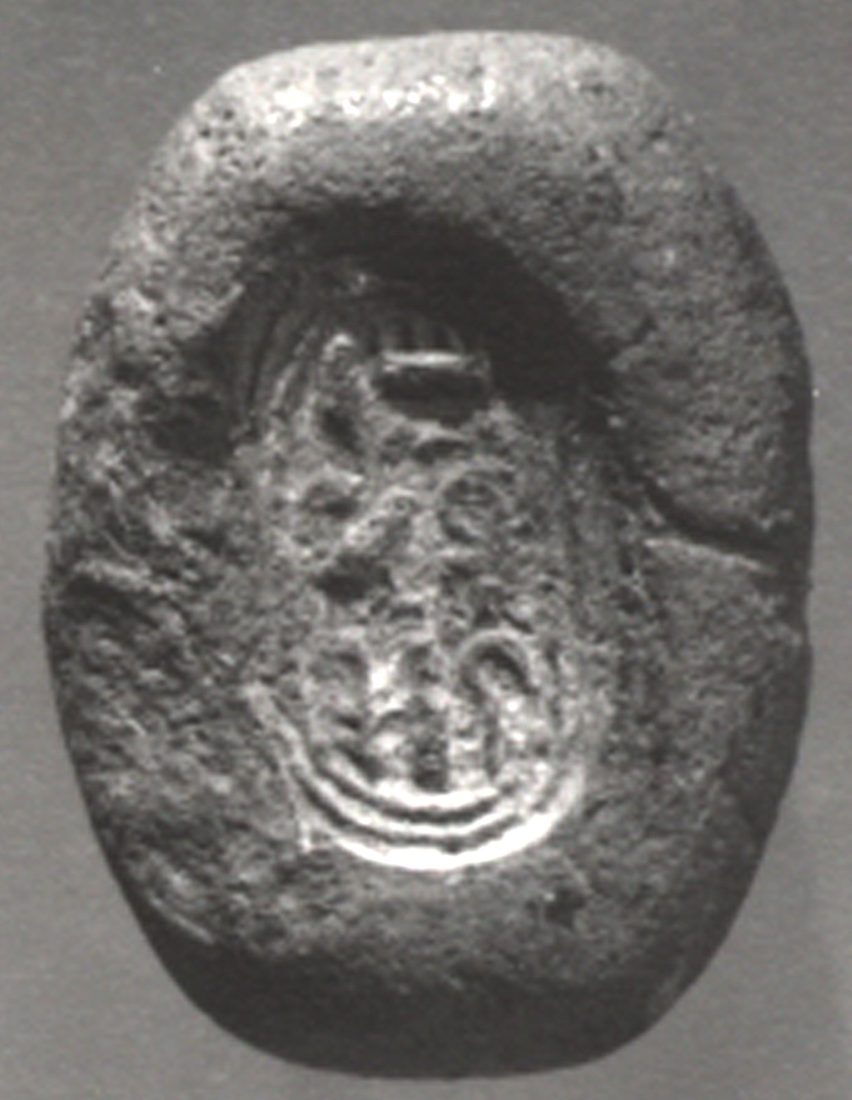
The kings of Kush who ruled Egypt as the 25th Dynasty wrote their names in cartouches too. Taharqa’s name is incised between the paws of his sphinx (British Museum EA1770).
The offering formula
Read a tomb stela · 5 min
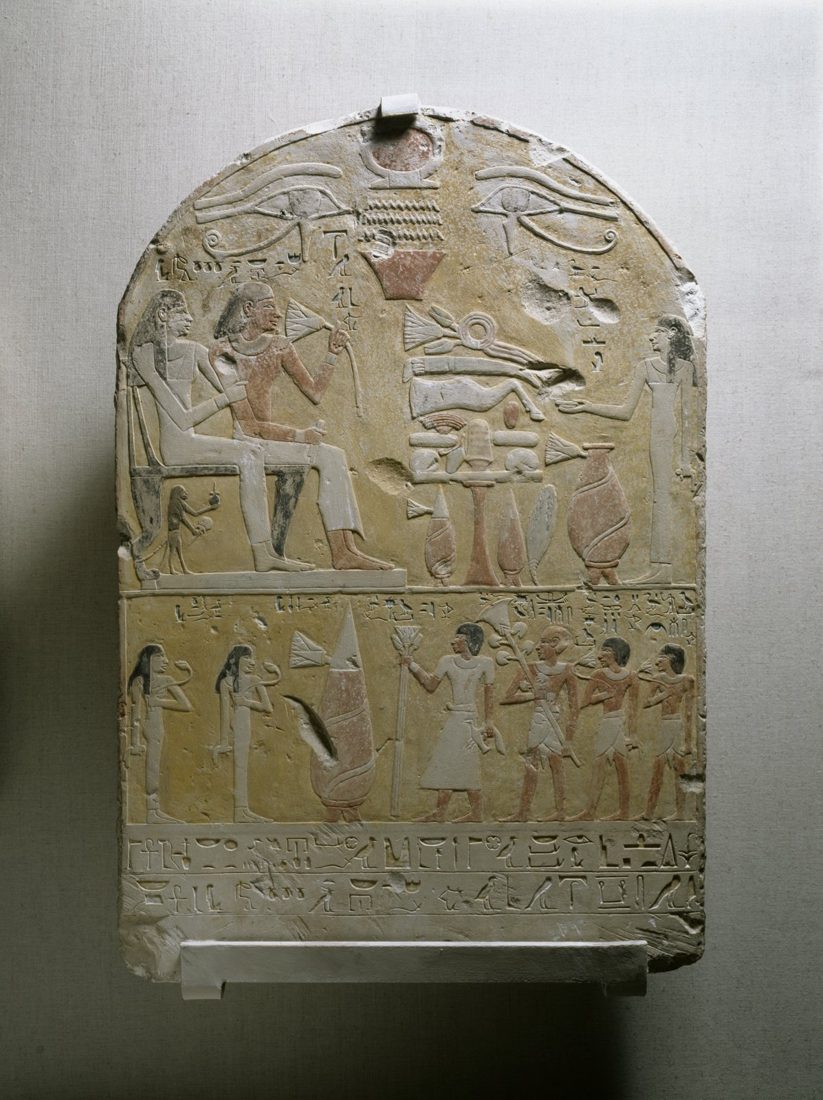
The most common sentence in Egypt
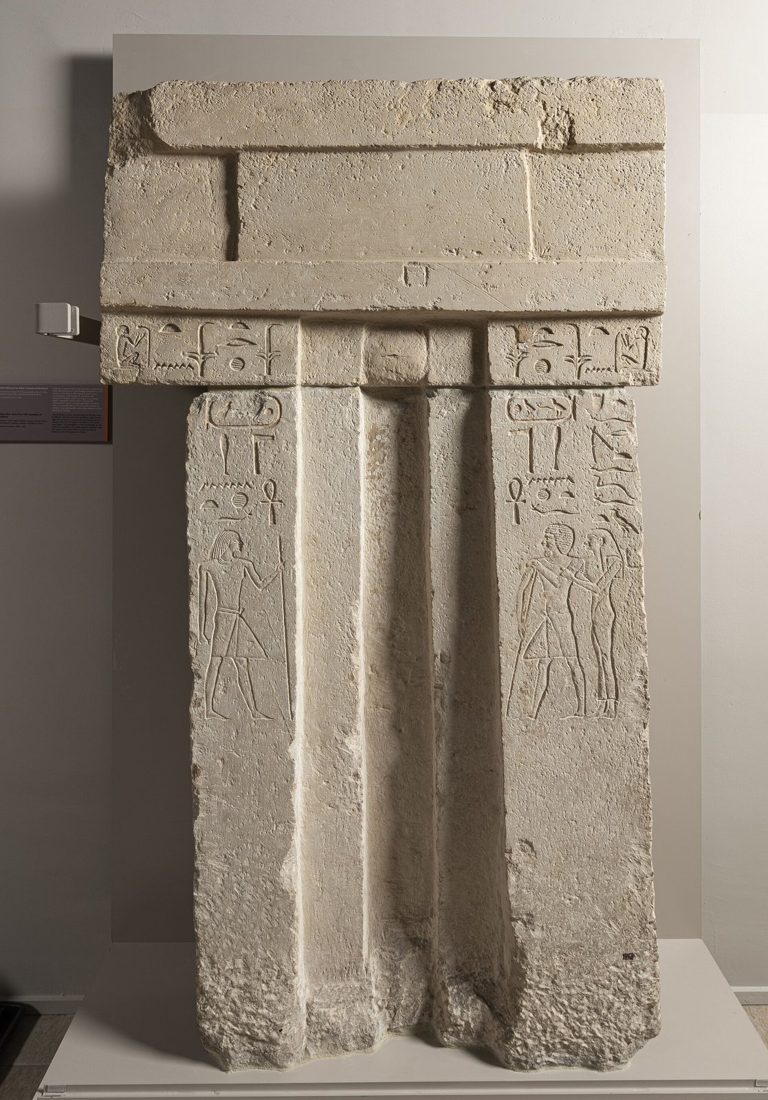
Thousands of stelae and false doors begin with ḥtp-dj-nsw, ‘an offering which the king gives’. The king’s sedge 𓇓 is written first out of respect, then the offering loaf on a mat 𓊵 and the ‘give’ loaf 𓏙.
To a god
Next comes the god: often Osiris, lord of Busiris, or Anubis, ‘upon his mountain’.
An invocation offering
pr.t-ḫrw, literally ‘going forth of the voice’: 𓉐𓂋𓏏𓊤. Then the list: bread and beer 𓏐𓏊, oxen and fowl, alabaster and linen.
For the ka of …
The formula ends ‘for the ka (𓂓, life force) of’ the owner, whose name is followed by mꜣꜥ-ḫrw, ‘true of voice’ (justified), 𓐙𓊤.
Genesis 10 & the names of the lands
Mizraim, Kush, Canaan · 4 min
Kemet: the Egyptians’ own name
The Egyptians called their land km.t, ‘the Black (Land)’, after the dark Nile soil: crocodile-skin sign 𓆎 (km), owl 𓅓, bread 𓏏 and the city sign 𓊖.
Mizraim: the Semitic name
Hebrew Miṣrayim (Genesis 10:6) is the Semitic name for Egypt, matching Akkadian Miṣri / Muṣur in the Amarna letters and Arabic Miṣr. It is not an Egyptian word.
Kush in Egyptian texts
From the Middle Kingdom on, Egyptian texts call the land south of Egypt kꜣš, Kush: basket 𓎡, vulture 𓄿, pool 𓈙, with the foreign-hills sign 𓈉. It is the same name as Hebrew Kûš.
Canaan on the Merneptah Stele
The Merneptah Stele (Egyptian Museum, Cairo, CG 34025 / JE 31408; c. 1208 BC) says “Canaan is plundered” and names Israel a line later. Egypt writing about Canaan: two of Ham’s sons’ lands in one text.
Study tool, not proof
These names show that Egypt, Kush and Canaan were real, named neighbours, as Genesis 10 presents them. The hieroglyphs do not by themselves prove the genealogy; the book makes that argument from Scripture.
Sources, credits and licences
Sign codes, names and sound values: the Unicode Standard (Egyptian Hieroglyphs), Unicode License v3; glyphs drawn with Noto Sans Egyptian Hieroglyphs (SIL OFL 1.1). Ancient sentences in the library: Thesaurus Linguae Aegyptiae, Berlin-Brandenburg Academy of Sciences and Humanities and Saxon Academy of Sciences in Leipzig, CC BY-SA 4.0. Photos as credited under each image. Further reading: A. H. Gardiner, Egyptian Grammar (3rd ed., 1957); J. P. Allen, Middle Egyptian (3rd ed., 2014).
This is a study tool for Mizraim (Genesis 10:6). It is not proof of the book’s argument.